



Your shopping cart is currently empty.
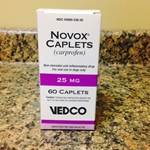
Carprofen (Generic) Caplets
Veterinarian Prescription (Rx) Required
Low Price Match Guarantee
Free Shipping on orders over $75

Low Price Match Guarantee
Free Shipping on orders over $75
- Prescription nonsteroidal anti-inflammatory drug (NSAID) for dogs
- Indicated for relief of pain and inflammation associated with osteoarthritis
- Indicated for control of postoperative pain associated with soft tissue and orthopedic surgery
- Contains carprofen, the same active ingredient found in Rimadyl
Price: $0.40
$0.36 -10% future orders
$0.36 -10% future orders
$0.36 -10% future orders
$0.36 -10% future orders
$0.36 -10% future orders
$0.36 -10% future orders
$0.36 -10% future orders
$0.36 -10% future orders
Licensed U.S. PharmacyReal pharmacists.
How to Order Prescriptions
Description
Carprofen Generic Caplets are a prescription nonsteroidal anti-inflammatory drug (NSAID) for dogs.
Carprofen is FDA approved for the relief of pain and inflammation associated with osteoarthritis and for the control of postoperative pain associated with soft tissue and orthopedic surgeries in dogs.
Carprofen is the same active ingredient found in Rimadyl and is available from multiple FDA-approved generic manufacturers. The specific manufacturer dispensed may vary.
Use the lowest effective dose for the shortest duration consistent with the individual dog's response and veterinarian directions.
Uses & Benefits
- Relieves pain associated with osteoarthritis in dogs
- Reduces inflammation associated with osteoarthritis
- Controls postoperative pain associated with soft tissue surgery
- Controls postoperative pain associated with orthopedic surgery
- Nonsteroidal anti-inflammatory drug
- Non-narcotic medication
- Contains carprofen as the active ingredient
- Oral caplet formulation for dogs
How It Works
Carprofen is a nonsteroidal anti-inflammatory drug with analgesic and anti-inflammatory activity.
Like other NSAIDs, carprofen inhibits cyclooxygenase activity and the production of prostaglandins involved in pain and inflammation.
The exact mechanism of action of carprofen is not completely understood.
Indications
Carprofen Generic Caplets are indicated in dogs for:
Osteoarthritis
Relief of pain and inflammation associated with osteoarthritis.
Postoperative Pain
Control of postoperative pain associated with soft tissue and orthopedic surgeries.
For control of postoperative pain, carprofen should be administered approximately 2 hours before the procedure according to veterinarian directions.
Ingredients
Active Ingredients:
Carprofen
Inactive Ingredients:
Inactive ingredients may vary by manufacturer. Refer to the dispensed manufacturer's label for complete inactive ingredient information.
Directions
Carefully consider the potential benefits and risks of carprofen and other treatment options before use.
Use the lowest effective dose for the shortest duration consistent with the individual dog's response.
The recommended dosage for oral administration to dogs is:
2 mg/lb (4.4 mg/kg) of body weight daily.
The total daily dose may be administered as:
- 2 mg/lb (4.4 mg/kg) once daily, or
- 1 mg/lb (2.2 mg/kg) twice daily
For control of postoperative pain, administer approximately 2 hours before the procedure according to veterinarian directions.
Carprofen may be administered with or without food.
Weight / Dosage
| Administration Schedule | Recommended Dose |
|---|---|
| Once Daily | 2 mg/lb (4.4 mg/kg) once daily |
| Twice Daily | 1 mg/lb (2.2 mg/kg) twice daily |
| Postoperative Pain | Administer approximately 2 hours before the procedure as directed by the veterinarian |
The veterinarian will determine the appropriate caplet strength and number of whole or partial caplets according to the dog's body weight and individual treatment requirements.
A Client Information Sheet should be provided with each prescription.
Administer exactly as prescribed by your veterinarian. Follow the prescription label exactly and veterinarian directions. Do not change the dose, frequency, or duration of administration unless directed by your veterinarian.
Cautions
Federal law restricts this drug to use by or on the order of a licensed veterinarian.
For oral use in dogs only.
Carprofen should not be used in dogs exhibiting previous hypersensitivity to carprofen.
Carprofen is an NSAID. As a class, NSAIDs may be associated with gastrointestinal, renal, and hepatic adverse reactions. Serious adverse reactions can occur without warning and, in rare situations, may result in hospitalization or death.
Owners should be advised to discontinue carprofen and contact their veterinarian immediately if signs of intolerance are observed.
Keep carprofen securely stored out of reach of children and animals.
Not for human use. Consult a physician in cases of accidental human ingestion.
Possible Side Effects
Adverse reactions associated with NSAID therapy may involve the gastrointestinal tract, kidneys, or liver.
Possible signs of an adverse reaction can include:
- Decreased appetite / Vomiting / Diarrhea / Dark or tarry stools / Changes in drinking / Changes in urination / Pale gums / Yellowing of the gums, skin, or whites of the eyes / Lethargy or decreased activity / Changes in behavior / Incoordination / Seizures / Skin reactions
Clinical studies have also reported observations including vomiting, diarrhea or soft stool, decreased appetite, dermatitis or skin lesions, and changes in certain laboratory values.
If any suspected adverse reaction occurs, stop administering carprofen and contact your veterinarian immediately.
Precautions
Dogs should undergo an appropriate medical history and physical examination before beginning NSAID therapy.
Appropriate laboratory testing to establish hematological and serum biochemical baseline values should be considered before administration and periodically during NSAID therapy.
Owners should be advised to watch for signs of potential adverse reactions.
Use with caution in dogs that:
- Are dehydrated
- Are receiving diuretic therapy
- Have existing kidney disease
- Have cardiovascular dysfunction
- Have liver dysfunction
- Have gastrointestinal disease
- Have coagulation disorders
Concurrent administration of potentially nephrotoxic medications should be carefully considered and monitored.
Carprofen should not be administered with other NSAIDs or corticosteroids unless specifically directed by the veterinarian. Appropriate washout periods should be considered when switching from one NSAID to another or when switching between corticosteroids and NSAIDs.
Drug compatibility should be considered in dogs requiring additional medications.
The safe use of carprofen in animals less than 6 weeks of age, pregnant dogs, dogs used for breeding purposes, or lactating dogs has not been established.
Use the lowest effective dose for the shortest duration consistent with the dog's individual response.
Storage
Store at 20°C to 25°C (68°F to 77°F). Temperature excursions are permitted between 15°C and 30°C (59°F and 86°F). Keep in the original container unless otherwise directed by the dispensing pharmacy. Keep securely stored out of reach of children and animals.
Disposal
Dispose of unused or expired Carprofen Generic Caplets according to applicable local medication disposal requirements.
Do not leave discarded medication where children or animals can access it.
Ask your veterinarian, pharmacist, or local medication take-back program about appropriate disposal options when needed.